INDIAN CLASSICAL MUSIC
Hindustani classical music ([hin̪d̪us̪t̪ɑːn̪i]) is the Hindustani or North Indian style of Indian classical music. The style is sometimes called North Indian classical music or Shāstriya Sangīt or Klāsikī Mausīqī. It is a tradition that has been evolving since the 12th century CE, in North India and to some extent in Afghanistan, Bangladesh, Sri Lanka, Nepal and Pakistan. Today, it is one of the two subgenres of Indian classical music, the other being Carnatic music, the classical tradition of South India. The traditional popular music genre of Indonesia, Dangdut, and its classical version is partly derived from Hindustani classical music, especially in the basis of instrumentation, melody, harmony, and beat. Its main instruments are Tabla and sometimes Sitar and modern guitars.
CHARACTERISTICS
It is traditional for performers who have reached a distinguished level of achievement to be awarded titles of respect; Hindus are usually referred to as pandit and Muslims as ustad. An aspect of Hindustani music going back to Sufi times is the tradition of religious neutrality: Muslim ustads may sing compositions in praise of Hindu deities, and vice versa. Around the 12th century, Hindustani classical music diverged from what eventually came to be identified as Carnatic classical music. The central notion in both these systems is that of a melodic mode or raga, sung to a rhythmic cycle or tala. These principles were refined in the musical treatises Natya Shastra, by Bharata (2nd–3rd century CE), and Dattilam (probably 3rd–4th century CE).[1] In medieval times, the melodic systems were fused with ideas from Persian music, particularly through the influence of Suficomposers like Amir Khusro, and later in the Mughal courts. Noted composers such as Tansen flourished, along with religious groups like the Vaishnavites. After the 16th century, the singing styles diversified into different gharanas patronized in different princely courts. Around 1900, Vishnu Narayan Bhatkhande consolidated the musical structures of Hindustani classical music, called ragas, into a number of thaats. Indian classical music has seven basic notes with five interspersed half-notes, resulting in a 12-note scale. Unlike the 12-note scale in Western music, the base frequency of the scale is not fixed, and intertonal gaps (temperament) may also vary; however, with the gradual replacement of the sarangi by the harmonium, an equal tempered scale is increasingly used. The performance is set to a melodic pattern called a raga characterized in part by specific ascent (aroha) and descent (avaroha) sequences, which may not be identical. Other characteristics include "king" (vadi) and "queen" (samavadi) notes and characteristic phrases (pakad). In addition each raga has its natural register (ambit) and portamento (meend) rules. Performances are usually marked by considerable improvisation within these norms.
HISTORY
SANSKRITIC TRADITION
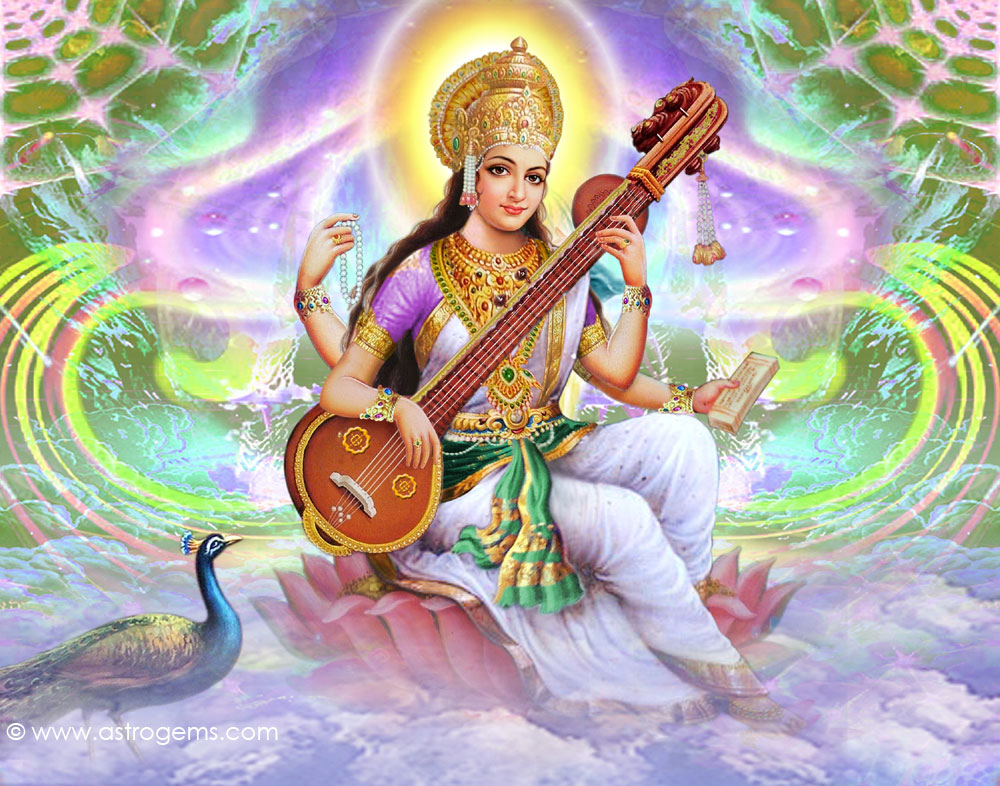
Music is dealt with extensively in the Valmiki Ramayana. Narada is an accomplished musician, as is Ravana; Saraswati with her veena is the goddess of music. Gandharvas are presented as spirits who are musical masters, and the gandharva style looks to music primarily for pleasure, accompanied by the soma rasa. In the Vishnudharmottara Purana, the Naga king Ashvatara asks to know the svaras from Saraswati. The most important text on music in the ancient canon is Bharata's Natya Shastra, composed around the 3rd century CE. The Natya Shastra deals with the different modes of music, dance, and drama, and also the emotional responses (rasa) they are expected to evoke. The scale is described in terms of 22 micro-tones, which can be combined in clusters of four, three, or two to form an octave. While the term raga is articulated in the Natya Shastra (where its meaning is more literal, meaning "colour" or "mood"), it finds a clearer expression in what is called jati in the Dattilam, a text composed shortly after or around the same time as Natya Shastra. The Dattilam is focused on gandharva music and discusses scales (swara), defining a tonal framework called grama in terms of 22 micro-tonal intervals (sruti[2]) comprising one octave. It also discusses various arrangements of the notes (murchhana), the permutations and combinations of note-sequences (tanas), and alankara or elaboration. Dattilam categorizes melodic structure into 18 groups called jati, which are the fundamental melodic structures similar to the raga. The names of the jatis reflect regional origins, for example andhri and oudichya. Music also finds mention in a number of texts from the Gupta period; Kalidasa mentions several kinds of veena (Parivadini, Vipanchi), as well as percussion instruments (mridang), the flute (vamshi) and conch (shankha). Music also finds mention in Buddhistand Jain texts from the earliest periods of the Christian era. Narada's Sangita Makarandha treatise, from about 1100 CE, is the earliest text where rules similar to those of current Hindustani classical music can be found. Narada actually names and classifies the system in its earlier form before the Persian influences introduced changes in the system. Jayadeva's Gita Govinda from the 12th century was perhaps the earliest musical composition sung in the classical tradition called Ashtapadi music. In the 13th century, Sharngadeva composed the Sangita Ratnakara, which has names such as the turushka todi ("Turkish todi"), revealing an influx of ideas from Islamic culture. This text is the last to be mentioned by both the Carnatic and the Hindustani traditions and is often thought to date the divergence between the two.
MEDIEVAL PERIOD
The advent of Islamic rule under the Delhi Sultanate and later the Mughal Empire over northern India caused considerable cultural interchange. Increasingly, musicians received patronage in the courts of the new rulers, who in their turn, started taking increasing interest in local music forms. While the initial generations may have been rooted in cultural traditions outside India, they gradually adopted many aspects from their kingdoms which retained the traditional Hindu culture. This helped spur the fusion of Hindu and Muslim ideas to bring forth new forms of musical synthesis like qawwali and khyal. The most influential musician of the Delhi Sultanate period was Amir Khusrau (1253–1325)- A composer in Persian, Turkish, Arabic, as well as Braj Bhasha. He is credited with systematizing some aspects of Hindustani music, and also introducing several ragas such as Yaman Kalyan, Zeelaf and Sarpada. He created the qawwali genre, which fuses Persian melody and beat on a dhrupad like structure. A number of instruments (such as the sitar) were also introduced in his time. Amir Khusrau is sometimes credited with the origins of the khyal form, but the record of his compositions do not appear to support this. The compositions by the court musician Sadarang in the court of Muhammad Shah bear a closer affinity to the modern khyal. They suggest that while khyal already existed in some form, Sadarang may have been the father of modern khyal. Much of the musical forms innovated by these pioneers merged with the Hindu tradition, composed in the popular language of the people (as opposed to Sanskrit) in the work of composers like Kabir or Nanak. This can be seen as part of a larger Bhakti tradition, (strongly related to the Vaishnavite movement) which remained influential across several centuries; notable figures include Jayadeva(11th century), Vidyapati (fl. 1375 CE), Chandidas (14th–15th century), and Meerabai (1555–1603 CE). As the Mughal Empire came into closer contact with Hindus, especially under Jalal ud-Din Akbar, music and dance also flourished. In particular, the musician Tansen introduced a number of innovations, including ragas and particular compositions. Legend has it that upon his rendition of a night-time raga in the morning, the entire city fell under a hush and clouds gathered in the sky, and that he could light fires by singing the raga "Deepak", which is supposed to be composed of notes in high octaves. At the royal house of Gwalior, Raja Mansingh Tomar (1486–1516 CE) also participated in the shift from Sanskrit to the local idiom (Hindi) as the language for classical songs. He himself penned several volumes of compositions on religious and secular themes, and was also responsible for the major compilation, the Mankutuhal ("Book of Curiosity"), which outlined the major forms of music prevalent at the time. In particular, the musical form known as dhrupad saw considerable development in his court and remained a strong point of the Gwalior gharana for many centuries. After the dissolution of the Mughal empire, the patronage of music continued in smaller princely kingdoms like Awadh, Patiala, and Banaras, giving rise to the diversity of styles that is today known as gharanas. Many musician families obtained large grants of land which made them self-sufficient, at least for a few generations (e.g. the Sham Chaurasia gharana). Meanwhile, the Bhakti and Sufitraditions continued to develop and interact with the different gharanas and groups.
MODERN ERA
Until the late 19th century, Hindustani classical music was imparted on a one-on-one basis through the guru-shishya ("mentor-protégé") tradition. This system had many benefits, but also several drawbacks; in many cases, the shishya had to spend most of his time serving his guru with a hope that the guru might teach him a "cheez" (piece or nuance) or two. In addition, the system forced the music to be limited to a small subsection of the Indian community. To a large extent it was limited to the palaces and dance halls. It was shunned by the intellectuals, avoided by the educated middle class, and in general looked down upon as a frivolous practice.[3] Then a fortunate turn of events started the renaissance of Hindustani classical music. First, as the power of the maharajahs and nawabs declined in early 20th century, so did their patronage. With the expulsion of Wajid Ali Shah to Calcutta after 1857, the Lucknavi musical tradition came to influence the music of renaissance in Bengal, giving rise to the tradition of Ragpradhan gan around the turn of the century. Raja Chakradhar Singh of Raigarh was the last of the modern era Maharahas to patronize Hindustani classical musicians, singers and dancers.[4][5] Also, at the turn of the century, two great stars emerged on the horizon: Vishnu Digambar Paluskar and Vishnu Narayan Bhatkhande. Independent of each other, they spread Hindustani classical music to the masses in general, and the Marathi middle class in particular. These two gentlemen brought classical music to the masses by organizing music conferences, starting schools, teaching music in class-rooms, and devising a standardized grading and testing system, and by standardizing the notation system.[6] Vishnu Digambar Paluskar emerged as a talented musician and organizer despite having been blinded at age 12. His books on music, as well as the Gandharva Mahavidyalaya music school that he opened in Lahore in 1901, helped foster a movement away from the closed gharana system. Paluskar's contemporary (and occasional rival) Vishnu Narayan Bhatkhande recognized the many rifts that had appeared in the structure of Indian classical music. He undertook extensive research visits to a large number of gharanas, Hindustani as well as Carnatic, collecting and comparing compositions. Between 1909 and 1932, he produced the monumental four-volume work Hindustani Sangeetha Padhathi,[7] which suggested a transcription for Indian music, and described the many traditions in this notation. Finally, it consolidated the many musical forms of Hindustani classical music into a number of thaats (modes), subsequent to the Melakarta system that reorganized Carnatic tradition in the 17th century. The ragas as they exist today were consolidated in this landmark work, although there are some inconsistencies and ambiguities in Bhatkande's system. In modern times, the government-run All India Radio, Bangladesh Betar and Radio Pakistan helped to bring the artists to public attention, countering the loss of the patronage system. The first star was Gauhar Jan, whose career was born out of Fred Gaisberg's first recordings of Indian music in 1902. With the advance of films and other public media, musicians started to make their living through public performances. As India was exposed to Western music, some Western melodies started merging with classical forms, especially in popular music. A number of Gurukuls, such as that of Alauddin Khan at Maihar, flourished. In more modern times, corporate support has also been forthcoming, as at the ITC Sangeet Research Academy. Meanwhile, Hindustani classical music has become popular across the world through the influence of artists such as Ravi Shankar and Ali Akbar Khan, Kamal Mallick, Samaresh Chowdhury, Zakir Hussain, Amjad Ali Khan, Bismillah Khan, and Pritam Bhattacherjee, Rabin Meheta, Kaushiki Chakrabarty, Dr. Sinchan Das are of modern times.
PRINCIPLES OF HINDUSTANI MUSIC
The rhythmic organization is based on rhythmic patterns called tala. The melodic foundations are called ragas. One possible classification of ragas is into "melodic modes" or "parent scales", known as thaats, under which most ragas can be classified based on the notes they use. Thaats may consist of up to seven scale degrees, or swara. Hindustani musicians name these pitches using a system called Sargam, the equivalent of the Western movable do solfege: Sa (Shadja) = Do Re (Rishabh) = Re Ga (Gandhar) = Mi Ma (Madhyam) = Fa Pa (Pancham) = So Dha (Dhaivat) = La Ni (Nishad) = Si Sa (Shadja) = Do Both systems repeat at the octave. The difference between sargam and solfege is that re, ga, ma, dha, and ni can refer to either "Natural" (shuddha) or altered "Flat" (komal) or "Sharp" (tivra) versions of their respective scale degrees. As with movable do solfege, the notes are heard relative to an arbitrary tonic that varies from performance to performance, rather than to fixed frequencies, as on a xylophone. The fine intonational differences between different instances of the same swara are called srutis. The three primary registers of Indian classical music are mandra (lower), madhya (middle) and taar (upper). Since the octave location is not fixed, it is also possible to use provenances in mid-register (such as mandra-madhya or madhya-taar) for certain ragas. A typical rendition of Hindustani raga involves two stages: Alap: a rhythmically free improvisation on the rules for the raga in order to give life to the raga and flesh out its characteristics. The alap is followed by a long slow-tempo improvisation in vocal music, or by the jod and jhala in instrumental music. Bandish or Gat: a fixed, melodic composition set in a specific raga, performed with rhythmic accompaniment by a tabla or pakhavaj. There are different ways of systematizing the parts of a composition. For example: Sthaayi: The initial, rondo phrase or line of a fixed, melodic composition. Antara: The first body phrase or line of a fixed, melodic composition. Sanchaari: The third body phrase or line of a fixed, melodic composition, seen more typically in dhrupad bandishes Aabhog: The fourth and concluding body phrase or line of a fixed, melodic composition, seen more typically in Dhrupad bandishes. There are three variations of bandish, regarding tempo: Vilambit bandish: A slow and steady melodic composition, usually in largo to adagio speeds. Madhyalaya bandish: A medium tempo melodic competition, usually set in andante to allegretto speeds. Drut bandish: A fast tempo melodic composition, usually set to allegretto speed or faster. Hindustani classical music is primarily vocal-centric, insofar as the musical forms were designed primarily for vocal performance, and many instruments were designed and evaluated as to how well they emulate the human voice.
TYPES OF COMPOSITIONS
The major vocal forms or styles associated with Hindustani classical music are dhrupad, khyal, and tarana. Other forms include dhamar, trivat, chaiti, kajari, tappa, tap-khyal, ashtapadis, thumri, dadra, ghazal and bhajan; these are folk or semi-classical or light classical styles, as they often do not adhere to the rigorous rules of classical music.
DHRUPAD
Dhrupad is an old style of singing, traditionally performed by male singers. It is performed with a tambura and a pakhawaj as instrumental accompaniments. The lyrics, some of which were written in Sanskrit centuries ago, are presently often sung in brajbhasha, a medieval form of North and East Indian languages that was spoken in Eastern India. The rudra veena, an ancient string instrument, is used in instrumental music in dhrupad. Dhrupad music is primarily devotional in theme and content. It contains recitals in praise of particular deities. Dhrupad compositions begin with a relatively long and acyclic alap, where the syllables of the following mantra is recited: "Om Anant tam Taran Tarini Twam Hari Om Narayan, Anant Hari Om Narayan". The alap gradually unfolds into more rhythmic jod and jhala sections. These sections are followed by a rendition of bandish, with the pakhawaj as an accompaniment. The great Indian musician Tansen sang in the dhrupad style. A lighter form of dhrupad, called dhamar, is sung primarily during the festival of Holi. Dhrupad was the main form of northern Indian classical music until two centuries ago, when it gave way to the somewhat less austere khyal, a more free-form style of singing. Since losing its main patrons among the royalty in Indian princely states, dhrupad risked becoming extinct in the first half of the twentieth century. However, the efforts by a few proponents, especially from the Dagar family, have led to its revival and eventual popularization in India and in the West. Some of the best known vocalists who sing in the Dhrupad style are the members of the Dagar lineage, including the senior Dagar brothers, Nasir Moinuddin and Nasir Aminuddin Dagar; the junior Dagar brothers, Nasir Zahiruddin and Nasir Faiyazuddin Dagar; and Wasifuddin, Fariduddin, and Sayeeduddin Dagar. Other leading exponents include the Gundecha Brothers, who have received training from some of the Dagars. Leading vocalists outside the Dagar lineage include the Mallik family of Darbhanga tradition of musicians; some of the leading exponents of this tradition were Ram Chatur Mallick, Siyaram Tiwari, and Vidur Mallick. At present Prem Kumar Mallick, Prashant and Nishant Mallick are the Dhrupad vocalists of this tradition. A section of dhrupad singers of Delhi Gharana from Mughal emperor Shah Jahan’s court migrated to Bettiah under the patronage of the Bettiah Raj, giving rise to the Bettiah Gharana.[8] Bishnupur Gharana, based in West Bengal, is a key school that has been propagating this style of singing since Mughal times.
KHYAL
l Khyal is a more modern Hindustani form of vocal music. Khyal, literally meaning "thought" or "imagination" in Hindustani and derived from the Arabic term., is unusual as it is based on improvising and expressing emotion. A Khyal is a two- to eight-line lyric set to a melody. The lyric is of an emotional account possibly from poetic observation.[clarification needed] Khyal contains a greater variety of embellishments and ornamentations compared to dhrupad. Khyal's romanticism has led to it becoming the most popular genre of Hindustani classical music. The importance of the Khyal's content is for the singer to depict, through music in the set raga, the emotional significance of the Khyal. The singer improvises and finds inspiration within the raga to depict the Khyal. The origination of Khyal is controversial, although it is accepted that this style was based on Dhrupad and influenced by outside Musical influences. Many argue that Amir Khusrau created the style in the late 14th century. This form was popularized by Mughal Emperor Mohammad Shah, through his court musicians. Some well-known composers of this period were Sadarang, Adarang, and Manrang.
TARANA
Another vocal form, taranas are medium- to fast-paced songs that are used to convey a mood of elation and are usually performed towards the end of a concert. They consist of a few lines of poetry with soft syllables or bols set to a tune. The singer uses these few lines as a basis for fast improvisation. The tillana of Carnatic music is based on the tarana, although the former is primarily associated with dance.
TAPPA
Tappa is a form of Indian semi-classical vocal music whose specialty is its rolling pace based on fast, subtle, knotty construction. It originated from the folk songs of the camel riders of Punjab and was developed as a form of classical music by Mian Ghulam Nabi Shori or Shori Mian, a court singer for Asaf-Ud-Dowlah, the Nawab of Awadh. "Nidhubabur Tappa", or tappas sung by Nidhu Babu were very popular in 18th and 19th-century Bengal. Among the living performers of this style are Laxmanrao Pandit, Shanno Khurana, Manvalkar, Girija Devi, Ishwarchandra Karkare, Jayant Khot and Meeta Pandit.
THUMRI
Thumri is a semi-classical vocal form said to have begun in Uttar Pradesh with the court of Nawab Wajid Ali Shah, (r. 1847–1856). There are three types of thumri: poorab ang, Lucknavi and Punjabi thumri. The lyrics are typically in a proto-Hindi language called Brij Bhasha and are usually romantic. Some recent performers of this genre are Abdul Karim Khan, the brothers Barkat Ali Khan and Bade Ghulam Ali Khan, Begum Akhtar, Girija Devi, Beauty Sharma Barua, Nazakat-Salamat Ali Khan, Pt Ajoy Chakrabarty, Prabha Atre, Siddheshwari Devi, and Shobha Gurtu.
KHYAL
Khyal bases itself on a repertoire of short songs (two to eight lines); a khyal song is called a bandish. Every singer generally renders the same bandish differently, with only the text and the raga remaining the same. Khyal bandishes are typically composed in a variant of Urdu/Hindi, and sometimes in Marathi or Punjabi, and these compositions cover diverse topics, such as romantic or divine love, praise of kings or gods, the seasons, dawn and dusk, and the pranks of Krishna, and they can have symbolism and imagery.[1] The bandish is divided into two parts — the sthayi (or asthayi) and the antara, with the former considered more important as it shows the melodic contours of the raga. The sthayi often uses notes from the lower octave and the lower half of the middle octave, while the antara ascends to the tonic of the upper octave and beyond before descending and linking back to the sthayi.[1] The singer uses the composition as raw material for improvisation, accompanied by a harmonium or bowed string instrument such as the sarangi or violin playing off the singer's melody line, a set of two hand drums (the tabla), and a drone in the background. The role of the accompanist playing the melody-producing instrument is to provide continuity when the singer pauses for breath, using small variations of the singer's phrases or parts thereof. While there is a wide variety of rhythmic patterns that could be used by the percussionist, khyal performances typically use Ektaal, Jhoomra, Jhaptaal, Tilwada, Tintal, Rupak, and Adachautaal.[2] A typical khyal performance uses two songs — the bada khyal or great khyal, in slow tempo (vilambit laya), comprises most of the performance, while the chhota khyal (small khyal), in fast tempo (drut laya), is used as a finale and is usually in the same raga but a different taal. The songs are sometimes preceded by improvised alap to sketch the basic raga structure without drum accompaniment; alap is given much less room in khyal than in dhrupad. As the songs are short, and performances long (half an hour or more), the lyrics lose some of their importance. Improvisation is added to the songs in a number of ways: for example improvising new melodies to the words, using the syllables of the songs to improvise material (bol-baant, bol-taans), singing the names of the scale degrees — sa, re, ga, ma, pa, dha and ni (sargam) — or simply interspersing phrases sung on vowels, usually the vowel A, akaar taans. Taans are one of the major distinguishing features of the khyal.[1] Now and then, the singer returns to the song, especially its first line, as a point of reference. Besides the vilambit (slow) and drut (fast) tempos, a performance may include ati-vilambit (ultra-slow), madhya (medium speed) and ati-drut (super-fast) tempos. Song forms such as taranas, thumris or tappas are sometimes used to round off a khyal performance.
HISTORY
Khayal was popularized by Niyamat Khan (a.k.a. Sadarang) and his nephew Firoz Khan (a.k.a. Adarang), both musicians in the court of Muhammad Shah Rangile (1719–1748). It seems likely that khyal already existed at the time, although perhaps not in the present form.[1] The compositions of Sadarang and Adarang employ the theme of Urdu love-poetry. The khyal of this period also acquired the dignity of Dhrupad and the manner of the veena in its glide or meend, plus a number of musical alankars that were introduced into the body of the composition[citation needed]. The gharana system arose out of stylistic rendering of the khyal by various subsequent generations of musicians. The gharanas have distinct styles of presenting the khyal — how much to emphasize and how to enunciate the words of the composition, when to sing the sthayi and antara, whether to sing an unmetered alap in the beginning, whether to do bol-alap or aakar-alap, what kinds of improvisations to use, how much importance to give to the rhythmic aspect, and so on. With India united into a country from various scattered princely states, with royal courts and the zamindari system abolished, and with modern communications and recording technology, stylistic borders have become blurred and many singers today have studied with teachers from more than one gharana. This used to be uncommon, and a few decades ago teachers used to forbid students to even hear other gharana singers perform, not allowing them to buy records or listen to the radio[citation needed]. Today, as always, a singer is expected to develop an individual style, albeit one that is demonstrably linked to tradition.
MUSIC THERAPY
The beep of ventilators and infusion pumps, the hiss of oxygen, the whir of carts and the murmur of voices as physicians and nurses make rounds — these are the typical noises a premature infant hears spending the first days of life in the neonatal intensive care unit (NICU). While the sounds of such life-saving equipment are tough to mute, a new study suggests that some sounds, such as lullabies, may soothe pre-term babies and their parents, and even improve the infants' sleeping and eating patterns, while decreasing parents' stress (Pediatrics, 2013). Researchers at Beth Israel Medical Center's Louis Armstrong Center for Music and Medicine conducted the study, which included 272 premature babies 32 weeks gestation or older in 11 mid-Atlantic NICUs. They examined the effects of three types of music: a lullaby selected and sung by the baby's parents; an "ocean disc," a round instrument, invented by the Remo drum company, that mimics the sounds of the womb; and a gato box, a drum-like instrument used to simulate two-tone heartbeat rhythms. The two instruments were played live by certified music therapists, who matched their music to the babies' breathing and heart rhythms. The researchers found that the gato box, the Remo ocean disc and singing all slowed a baby's heart rate, although singing was the most effective. Singing also increased the amount of time babies stayed quietly alert, and sucking behavior improved most with the gato box, while the ocean disc enhanced sleep. The music therapy also lowered the parents' stress, says Joanne Loewy, the study's lead author, director of the Armstrong center and co-editor of the journal Music and Medicine. "There's just something about music — particularly live music — that excites and activates the body," says Loewy, whose work is part of a growing movement of music therapists and psychologists who are investigating the use of music in medicine to help patients dealing with pain, depression and possibly even Alzheimer's disease. "Music very much has a way of enhancing quality of life and can, in addition, promote recovery." MUSIC TO TREAT PAIN AND REDUCE STRESS While music has long been recognized as an effective form of therapy to provide an outlet for emotions, the notion of using song, sound frequencies and rhythm to treat physical ailments is a relatively new domain, says psychologist Daniel J. Levitin, PhD, who studies the neuroscience of music at McGill University in Montreal. A wealth of new studies is touting the benefits of music on mental and physical health. For example, in a meta-analysis of 400 studies, Levitin and his postgraduate research fellow, Mona Lisa Chanda, PhD, found that music improves the body's immune system function and reduces stress. Listening to music was also found to be more effective than prescription drugs in reducing anxiety before surgery (Trends in Cognitive Sciences, April, 2013). "We've found compelling evidence that musical interventions can play a health-care role in settings ranging from operating rooms to family clinics," says Levitin, author of the book "This is Your Brain on Music" (Plume/Penguin, 2007). The analysis also points to just how music influences health. The researchers found that listening to and playing music increase the body's production of the antibody immunoglobulin A and natural killer cells — the cells that attack invading viruses and boost the immune system's effectiveness. Music also reduces levels of the stress hormone cortisol. "This is one reason why music is associated with relaxation," Levitin says. One recent study on the link between music and stress found that music can help soothe pediatric emergency room patients (JAMA Pediatrics, July, 2013). In the trial with 42 children ages 3 to 11, University of Alberta researchers found that patients who listened to relaxing music while getting an IV inserted reported significantly less pain, and some demonstrated significantly less distress, compared with patients who did not listen to music. In addition, in the music-listening group, more than two-thirds of the health-care providers reported that the IVs were very easy to administer — compared with 38 percent of providers treating the group that did not listen to music. "There is growing scientific evidence showing that the brain responds to music in very specific ways," says Lisa Hartling, PhD, professor of pediatrics at the University of Alberta and lead author of the study. "Playing music for kids during painful medical procedures is a simple intervention that can make a big difference." Music can help adult patients, too. Researchers at Khoo Teck Puat Hospital in Singapore found that patients in palliative care who took part in live music therapy sessions reported relief from persistent pain (Progress in Palliative Care, July, 2013). Music therapists worked closely with the patients to individually tailor the intervention, and patients took part in singing, instrument playing, lyric discussion and even song writing as they worked toward accepting an illness or weighed end-of-life issues. "Active music engagement allowed the patients to reconnect with the healthy parts of themselves, even in the face of a debilitating condition or disease-related suffering," says music therapist Melanie Kwan, co-author of the study and president of the Association for Music Therapy, Singapore. "When their acute pain symptoms were relieved, patients were finally able to rest." THE HEALING POWER OF VIBRATION At its core, music is sound, and sound is rooted in vibration. Led by Lee Bartel, PhD, a music professor at the University of Toronto, several researchers are exploring whether sound vibrations absorbed through the body can help ease the symptoms of Parkinson's disease, fibromyalgia and depression. Known as vibroacoustic therapy, the intervention involves using low frequency sound — similar to a low rumble — to produce vibrations that are applied directly to the body. During vibroacoustic therapy, the patient lies on a mat or bed or sits in a chair embedded with speakers that transmit vibrations at specific computer-generated frequencies that can be heard and felt, says Bartel. He likens the process to sitting on a subwoofer. In 2009, researchers led by Lauren K. King of the Sun Life Financial Movement Disorders Research and Rehabilitation Centre at Wilfrid Laurier University, in Waterloo, Ontario, found that short-term use of vibroacoustic therapy with Parkinson's disease patients led to improvements in symptoms, including less rigidity and better walking speed with bigger steps and reduced tremors (NeuroRehabilitation, December, 2009). In that study, the scientists exposed 40 Parkinson's disease patients to low-frequency 30-hertz vibration for one minute, followed by a one-minute break. They then alternated the two for a total of 10 minutes. The researchers are now planning a long-term study of the use of vibroacoustic therapy with Parkinson's patients, as part of a new partnership with the University of Toronto's Music and Health Research Collaboratory, which brings together scientists from around the world who are studying music's effect on health. The group is also examining something called thalmocortical dysrhythmia — a disorientation of rhythmic brain activity involving the thalamus and the outer cortex that appears to play a role in several medical conditions including Parkinson's, fibromyalgia and possibly even Alzheimer's disease, says Bartel, who directs the collaboratory. "Since the rhythmic pulses of music can drive and stabilize this disorientation, we believe that low-frequency sound might help with these conditions," Bartel says. He is leading a study using vibroacoustic therapy with patients with mild Alzheimer's disease. The hope is that using the therapy to restore normal communication among brain regions may allow for greater memory retrieval, he says. "We've already seen glimmers of hope in a case study with a patient who had just been diagnosed with the disorder," Bartel says. "After stimulating her with 40-hertz sound for 30 minutes three times a week for four weeks, she could recall the names of her grandchildren more easily, and her husband reported good improvement in her condition." The goal of all of this work is to develop "dosable" and "prescribable" music therapy and music as medicine protocols that serve specific neurologic functions and attend to deficits that may result from many of these neurologically based conditions. Rather than viewing music only as a cultural phenomenon, Bartel says, the art should be seen as a vibratory stimulus that has cognitive and memory dimensions. "Only when we look at it in this way do we start to see the interface to how the brain and body work together." AMY NOVOTNEY IS A WRITER IN CHICAGO.
NEWS RELEAse
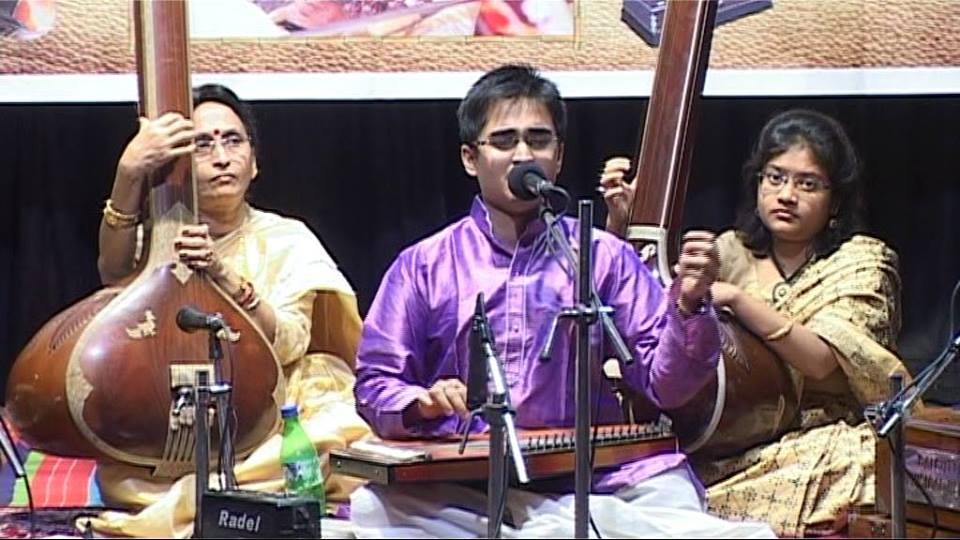
Sangeet Ratna Dr. Sinchan Das is a renowned classical vocalist from India, with mastery over the 'Barhat', 'Sargam' & 'Taan'. He is a successful disciple of Pt. Samaresh Chawdhury and Pt. Kamal Mallick. He was awarded with many awards & titles from a number of greatest musical maestros, like 'Sangget Ratna', 'Sangeet Visharad', 'Sangeet Shiromani', 'Sangeet Bhushan''Taankar', 'Taan ratna', 'Surasagar',The oldest award of music,i.e. "Grammaphone", 'Honorary Ph.D.' 'Emperror of music', 'Sangeetacharya', 'Voice of god' etc and many more. He have established himself as a master of rare raagas. He is the founder of a new era in Indian classical music. Most of all he has a god gifted quality in his music, which is able to magnetize the entire audience towards him.
